Grammy nomination + Liszt blockbusters: November performances
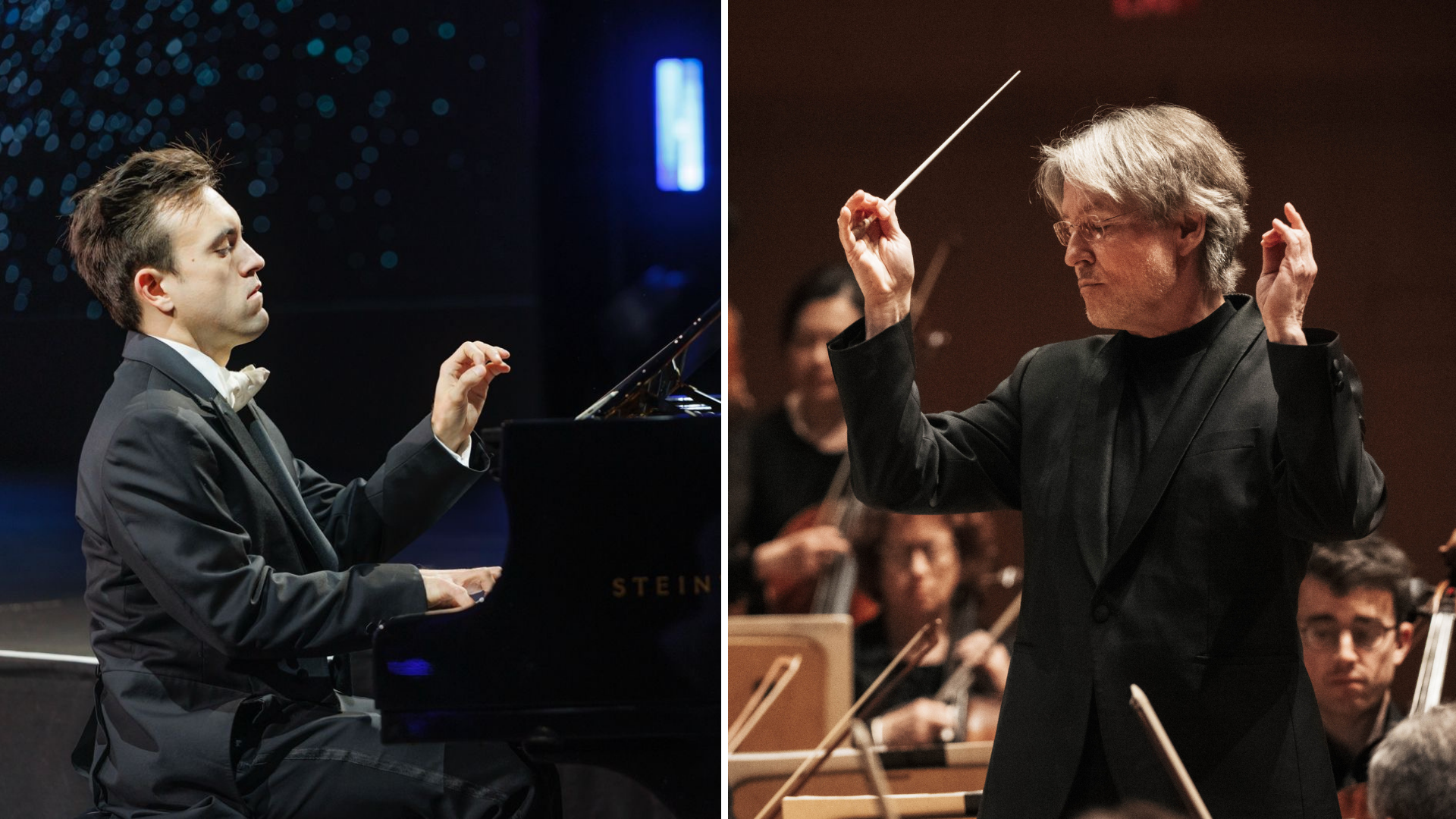
The San Francisco Symphony's recording of Stravinsky's Symphony in Three Movements, conducted by Esa-Pekka Salonen, has been nominated for Best Orchestral Performance at the 67th Grammy Awards. I play piano on this recording, and it's a piece that demands everything—rhythmic precision, explosive energy, and the ability to lock into an ensemble at the highest level.
Stravinsky wrote this symphony during World War II, and you can hear the urgency and chaos of that era in every measure. The piano part is relentless, almost mechanistic at times, but also deeply musical. It's a reminder that virtuosity isn't about showing off—it's about serving the music and the moment. Being part of this Grammy-nominated recording with one of the world's great orchestras is both humbling and thrilling.
Two Liszt Blockbusters at Marin Symphony
On November 8 and 9, I'll be performing Franz Liszt's Hungarian Fantasy and Totentanz with Marin Symphony under conductor Fawzi Haimor. These are pieces that live on the knife's edge between Romantic grandeur and technical mayhem—exactly the kind of music that reminds you why the piano exists in the first place.
Liszt understood something fundamental: virtuosity isn't about showing off. It's about creating sound so vivid, so physical, that the audience feels it in their bodies before they understand it with their minds. The Hungarian Fantasy opens with this sweeping, almost improvisatory introduction—like he's inviting you into a conversation he's been having with himself for years. And then Totentanz ("Dance of Death") takes that intimacy and explodes it into something apocalyptic. It's built on the Dies Irae plainchant, and Liszt treats it like a theme park ride through the sublime and the terrifying.
I've been thinking a lot lately about how Liszt was also a legendary improviser. These pieces weren't just composed—they were discovered through improvisation, then written down. So when I perform them, I try to honor that process. I come in with a plan, but I also leave room for the moment to shape the interpretation. Maybe the orchestra takes a phrase slower than expected, and suddenly I'm playing it more like a lullaby than a lament. Or maybe the hall has a longer reverb, and I can let the sound bloom in ways I didn't anticipate.
At San Francisco Symphony
Right after Marin, I'll be back at Davies Symphony Hall for two very different events. On November 13–14, composer Danny Elfman joins the San Francisco Symphony to perform his iconic scores from the films of Tim Burton—Beetlejuice, Edward Scissorhands, The Nightmare Before Christmas, and more—while visuals from Burton's films play on screen. As an orchestral pianist, my role is to help create the sonic world that makes these films unforgettable.
Then in late December, I'll be part of A Charlie Brown Christmas—LIVE! on December 21–22, where the Symphony performs Vince Guaraldi's beloved jazz score live to picture. It's straight-ahead jazz with a full orchestra, and it's one of those pieces that feels both nostalgic and timeless.
Chamber Music: Brahms & Mozart with Wyatt Underhill
On November 16, I'll join Wyatt Underhill, Assistant Concertmaster of the San Francisco Symphony, for an intimate evening of chamber music at a special donor event for the SF Philharmonic. We're performing Brahms's Violin Sonata in A Major and Mozart's Violin Sonata in E minor, KV 304—two works that demand absolute partnership between violin and piano.
Chamber music is where you truly collaborate. There's no conductor, no safety net—just two musicians listening to each other moment by moment. Wyatt brings exceptional artistry to this collaboration—he's been a soloist with orchestras around the country and his chamber music has taken him from the Kennedy Center to international festivals. It's the kind of performance where every phrase is negotiated in real time, and the audience gets to witness that intimate exchange.
What I'm Exploring
One of the questions I keep asking myself is: How do I keep pieces I've performed dozens of times feeling new every night?
The answer, I think, is that I don't actually perform the same piece twice. I might play the same notes, but the interpretation is always shifting. I have about five to ten working interpretations of any piece at any given time, and which one I choose depends on the room, the energy of the audience, the way the orchestra breathes that night. It's less about planning the perfect interpretation and more about staying open to what the music wants to become in that specific moment.
So when I'm preparing a piece—whether it's Liszt, Copland, or Gershwin—I try to tap into that improvisatory energy. I play it incredibly slowly, letting my ears lead instead of my fingers. I imagine the composer at the keyboard, making decisions moment by moment. And then when I get on stage, I try to recreate that sense of discovery, even if I've played the piece a hundred times before.
When this happens, there's this electric connection between the performer, the music, and the audience. Everyone's discovering something together. That's the magic I'm always chasing.
Upcoming Performances
Marin Symphony: Liszt & Brahms
Saturday & Sunday, November 8–9, 2025
College of Marin Performing Arts Center, Kentfield, CASan Francisco Symphony: Danny Elfman's Music from the Films of Tim Burton
Thursday & Friday, November 13–14, 2025
Davies Symphony Hall, San FranciscoChamber Recital with Wyatt Underhill
Saturday, November 16, 2025
SF Philharmonic, Blue Painted Lady SoireeChamber Recital with Victor Romasevich
Sunday, November 23, 2025
Berkeley Hillside Club
San Francisco Symphony: Crouching Tiger, Hidden Dragon Live to Picture
Tuesday, November 25, 2025
Davies Symphony Hall, San FranciscoSan Francisco Symphony: A Charlie Brown Christmas—LIVE!
Saturday & Sunday, December 21–22, 2025
Davies Symphony Hall, San FranciscoSan Francisco Symphony: US Premiere of Outi Tarkiainen's The Rapids of Life
Wednesday–Friday, January 22–24, 2026
Davies Symphony Hall, San Francisco